Friday, 8 April 2016

Driving Through Fairyland


What a fantastic drive this was alongside the Rauma River in Norway, which was still frozen over. Either side are rocky mountains which were decorated with snow and icicles. These are either waterfalls or frozen ice melt. Pretty spectacular.


In places on either side of the road were snowy fields looking like Persil white blankets with a few houses or huts dotted about. The only real signs of life were the animal tracks in the snow.


The first stop we made was at Trollveggan to gape at Europe's highest vertical drop (1,000 m.). Does the name of the place ring any bells? I got it wrong - nothing to do with Grieg's 'Wedding at Troldhaugen' but all about trolls, those really ugly gnomes. In the shop it was everything to do with trolls, enough to give me nightmares. Also a cafe and loos for those in need.


Then it was time to drive on through more spectacular scenery between the craggy mountains to the ski resort of Bjorli. Not a lot of skiers but loads of sparkling snow. Enough to made you put on your sun glasses. In the hotel we were treated to coffee and apple cake. The hour's stop was a bit too long as we ended up wandering about like lost souls until it was time to re-board the coach.


We returned to Andalsnes along the same route which is fantastic because both sides of the route have differences. For example, on the return journey I was able to see the Kylling Rail Bridge with its 59 metre drop. Apparently it took about nine years to build in the early 20th century.


I am sure that in the summer this part of Norway is just as beautiful, especially when the flowers are blooming and cattle are in the fields. At that time of the year it is popular with walkers and climbers but for me this was a magical drive through fairyland.

Monday, 28 March 2016

Even Travel Writers have Travel Woes


Always when I am on a cruise or holiday I seem to meet up with people who complain about various things not going right. Very often it is that they have chosen the wrong holiday but don't want to admit it. Sometimes, especially on a cruise, if something goes wrong - either with the ship or the weather or anything else you can think of - the complaints are hung out on the line.
Let me tell you about my latest cruise -

The first port of call was Andalsnes and the tour I went on was delightful. Whenever we got off the coach the pavements were clear of snow and ice. But, come the second port of call, Tromso, not only were there some hills and slopes I couldn't have managed, but the pavements hadn't been cleared of snow and ice - just gritted. So I did not get to see the Arctic Cathedral, the Planetarium or the Museum.

This was NOT the fault of the shipping line or the tours department. It was MY fault. I should have checked out the excursion and the town more thoroughly.

Then came the BIG NIGHT OUT. Going to find the Northern Lights. As it would be below freezing we were all well wrapped up - and had to unwrap on the coach as it was an hour's drive to get to the camp. There we hurried to the cabin where hot chocolate and cake awaited us. After I had had mine I braved the cold and went outside. Fortunately there was enough snow that my boots could get a good grip but there was a horrendous north wind which was fine if it was behind you but trying to walk into it was a nightmare. I strolled, I stood, I sat on benches and like everyone else I looked up at the sky. Saw stars and clouds. Didn't see any lights. Back indoors for a thaw out. Another try to see the lights. A guide pointed to something in the sky - he could see it, I couldn't but I pointed the camera and took a photo. Nothing. The problem is that to the naked eye the 'lights' often look like wispy clouds. It is only when you photograph them that you see the colours. All those lovely photos we see in magazines and on telly are taken with special time-release cameras and videos. The average camera doesn't photograph them well at all.

I gave up and found a coach to get me back to the ship. Some people on the later tours did see the lights so my advice is that if you are ever going, take a tour after 9.00 p.m. I suspect that the  lights are stronger then.

The next morning I woke up at 6.00 and we were still in port - and it was snowing. Turns out we should have left at 3.30 a.m. but because of the tremendous wind we needed two tugs to get us safely away from the dock and only one tug was available. We finally left at midday after a second tug came to our aid.

We should have called at Stavanger for a morning but now there wasn't time. Of course there were complains and suggestions that if we had speeded up we could have been at that city for the afternoon. As I pointed out - on several occasions - there may not have been room in the port later in the day. Not to mention the fact that shipping is not so much monitored as martialled through the channel between the UK and the European mainland. Think aeroplane take off and landing times and how they are monitored.

I will, when I have a moment to spare, do a blog on the wonderful drive through the Romesdalen Valley from Andalsnes.

Wednesday, 2 March 2016

Sao Miguel in the Atlantic

Ponta Delgada, the capital of Sao Miguel in the Azores, was once a fishing village on the south coast and is now the port much visited by cruise ships.  Long ago it was fortified against attacks by pirates then in the 18th and 19th centuries economic growth brought prosperity.  The result of this was the building of palaces, mansions, churches and monuments so lots of interesting things to see during a stroll.

On the drive from Ponta Delgada to Ribeira Grande on the north coast is through some splendid countryside. Farms where black and white Friesian and Jersey cows graze, then on through plantations of pineapples, bananas, sugar beet, chicory and vineyards.

The first settlers in Ribeira Grande were drawn to the area by the fast flowing streams where they built water mills to help the weaving of linen and wool. Some of the houses in the town have pretty wrought-iron balconies while others have ceramic tiled facades and, of course, there are several churches.  On either side of the river are beautiful gardens through which to stroll and relax taking in the sights and aromas of the colourful flowerbeds, lush green lawns and trees.

Tea Plantation
The road along the northern coast is high above the fantastic rocky coastline and aquamarine sea.  Along here are market gardens and farms, flowers such as amaryllis, pink belladonna, azaleas and camellias abound.  There are also chestnut trees and tea plantations.  (The teas grown here are orange pekoe and green.) 

One of the most famous areas on Sao Miguel is the Furnas Valley which is a huge volcanic crater containing a lake and gardens and surrounded by tree covered hills.  The gardens contain the usual array of brilliant flowers along with ferns and bracken, bright green Japanese cedars and araucarias. 

Tucked in among the trees on one side of the lake is the Gothic Jose de Canto Chapel which is dedicated to Our Lady of Victories.  With its reflection in the still waters of the lake it makes a very pretty and popular picture for photographers.

In the town of Furnas the Caldeiras are spectacular with geysers of boiling water and medicinal mud.  There are even taps of mineral waters from which people fill bottles and jugs for the home although, having tasted some of the water I wonder why? Make sure you have a large handkerchief or scarf with which to cover your mouth and nose when strolling among the geysers - the smell is horrendous!
 
What I really enjoyed was visiting the beautiful Terra Nostra Park.  It was created in the 18th century by Thomas Hickling and has many walking trails, lakes and streams, plenty of colourful and exotic flowers, and ancient trees.  The swimming pool is extraordinary.  Here is not garish blue water but an enormous lake of thermal iron water – brownish.  It looks very dirty but is very healthful.

Several people I met on the cruise (P&O of course) and who also went ashore on the island told me that they are planning to go back for a holiday. What a good idea.


Monday, 15 February 2016

The Mountains and Maquis of Corsica


For me the word 'Maquis' conjures up the brave French Freedom Fighters of World War II.
They adopted the word maquis from the landscape of shrubs and herbs in which Corsican bandits once hid. When touring the Corsican maquis it is easy to see what a great hideaway this is.


As our coach climbed away from the coast at Ajaccio we drove through woods and areas of shrubs, arbutus (the strawberry tree, so named for its red berries), myrtle, honeysuckle, laurel, thyme, rosemary, fennel and lavender. Very aromatic.


The first turning we made off the highway was onto a two lane road with room for vehicles to pass - later we ended up on a very narrow road but, fortunately, didn't have to do any reversing. From here on in the roads twisted and turned, going ever higher and we eventually stopped - in a small lay-by - to take photos of some clear waterfalls splashing over rocks at the head of the Prunelli Gorge through which the River of the same name flows.

As we wound our way along the side of the gorge there were cliffs along one side and the steep gorge on the other. Quite scary. Scared? Me? Nope. I thought it was fabulous.


Gradually the Tolla Lake came into view between the tree and shrub clothed foothills. (This is a man-made lake to provide water for Ajaccio.) Here there was another photo stop before driving up to the village for a rest break and a drink. I'm not sure whether the break was for the coach, the driver or so that passengers could fortify themselves ready for the drive down and back to Ajaccio. Whatever the reason the peace and quiet of that mountain village was magical.


As was the tour. I really felt that by taking this excursion I was seeing and experiencing the real Corsica. Its heartland. Yes, I was on a P&O cruise but this time on the Aurora - lovely ships.


Wednesday, 10 June 2015

An exhausting few days in York


Between its Jorvic connections, the Minster and the Roman Walls, there is plenty to see in York.  Add to this York Castle and nearby museums, Fairfax House and the National Railway Museum and you have a fair idea of how tiring just a few days can be.

The staircase up to York Castle
Oh yes, I did ‘walk the walls’ which, once past the Minster, are far less crowded.  In fact, I hardly saw anyone else on them.  What is left of York Castle is high on a mound with a steep flight of steps.  I stood at the bottom and thought ‘no way’.  Then girded my loins and toiled my way up, a few steps at a time. Once inside the roofless tower I meandered then climbed some more.  This time up very ancient twisting stairs thinking about all of the people since Roman times who have climbed them. Awesome.  Out on the top there are some fantastic views across York and the countryside.  Even across to the old Terry's chocolate factory.  They produced my very favourite chocolate.

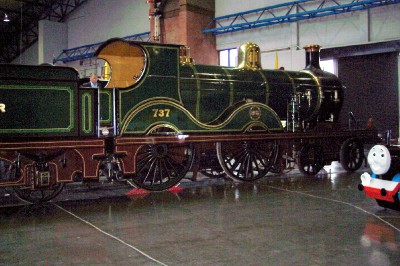
I did stroll through the Georgian Fairfax House which is near the Museum but I have to confess that I spent more time at the National Railway Museum than at the other ones.  As it is so large, that is understandable.  Situated outside the city walls within a short walk of York Station, it is divided into sections.  The Station Hall has railway carriages on display – some very special ones: Royal ones such as for Edward VII, George V and Queen Victoria.  The Great Hall is where the engines – from the Rocket to a Japanese Bullet train (the only one outside of Japan) are on display.  This Hall is very popular with Harry Potter fans as it is here that the wine red engine for the Hogwarts Express is kept.

A big old puffer train alongside Thomas the Tank Engine.

Tuesday, 5 August 2014

Strolling through Bruges

Bruges has a really romantic corner called Minnewater - the Lake of Love.  As I stood on the bridge and gazed at the still water, at the lawns on either side and at the pairs of graceful swans, I felt a deep sense of peace.  I could imagine young couples strolling hand in hand or lying on the grass and vows being exchanged.  All very romantic.  And before I turned away I spotted several couples.

This is an ancient city which was once a port.  Until the 16th century it was a great trading post.  Then the River Zwin silted up and the Flemish cloth industry collapsed and Bruges fell asleep.

But, like the Sleeping Beauty it was awoken by a prince.  A strange one – the port of Zeebrugge was built in 1907 and a canal linked it to Bruges.

As Bruges is a walking city you need comfortable shoes.  Strolling really is the only way to see and admire all the streets and buildings.

With such a sumptuous variety of architecture on offer it is difficult to know where to begin. But the canal boats beckon. A smooth, serene sail along narrow waterways which give views, not otherwise seen, of wonderful buildings, with an informative guide telling you what you are seeing and giving a potted history of the City.

Buildings vary from bricks and wood to plaster-faced, plain, ornate, square, hexagonal and octagonal. Some are satisfied with simply edging the water, others hang out over it and at least one spans the canal.

Back on dry land the Main Square is obligatory. It is dominated by medieval buildings such as the 13th c. covered market, a hexagonal belfry (366 steps to the top if you are feeling energetic), and the 14th c. Town Hall - very erect, with towers and turrets reaching to the sky and tall, narrow windows ornamented with the coats of arms of surrounding towns. Across the Square are several 17th c. houses of varying designs.

For a view of the towers of the St. Salvator Cathedral, the church of Notre-Dame and the belfry, I strolled along to the Green Quay (Groene Rei).  It also gave me a chance to sit down and rest, admire the tree-lined gardens and the hump-backed bridges.  Seeing a bas relief pelican over the main entrance to a cluster of pretty little houses I went for a closer look.  It is actually De Pelikaan, homes for the elderly, which was founded in 1714.

 Returning back towards the centre of town I detoured around the back streets and discovered a small square where I found a delightful metal statue - a small carriage with a naked lady stretched across the back seat, a startled looking horse and bowler hatted driver.


As I was on a cruise I had to watch the time so that I didn't miss the return coach.  My few hours did leave me wanting to visit Bruges again.  Would that be the third or fourth time?

Sunday, 3 August 2014

Wonderful Copenhagen

'Helter-skelter Spire'
What a well-planned excursion we had in Copenhagen.  First we were taken to see the most popular sights - the Little Mermaid and the Amelienborg Palace.  Following a drive around the city we were dropped off in an older part of town and took a walk before boarding a river boat.


While we were near the Little Mermaid (and impossible to take a photo without someone else being in the picture!) I also had a good look around.  Anchored offshore is the beautiful white Royal Yacht.


The procession of coaches then headed for the Amelienborg Palace which is made up of four identical buildings.  One for Queen Margarethe and Prince Henrik, another the Crown Prince and Princess and their family, a third where banquets are held and the fourth is a museum.  Overlooking the square is the Marble Church (Frederik's Church).  I assume it is named for Frederik V whose equestrian statue is in the square.

Across from the palace are some gardens (crowded of course) with a view across the water of the new Opera House.  All glass and contemporary.


There was one more 'crowded' corner to visit and we were lucky that our driver found somewhere to park.  This was at Churchill Park we took photos of the Gefion Fountain.  Gefion is the Nordic goddess of fertility.  Nearby is a very English looking church which is dedicated to St. Alban and was built at the behest of our Queen Alexandra, who was Danish.


We all thoroughly enjoyed our walk in an old, old part of the city where the buildings have been restored instead of being knocked down.  There was one lovely surprise - a beautiful 'cottage' garden.  Please don't ask me where this area is.  We had driven in so many directions, including past Tivoli, that I have no idea where we were.


The Black Diamond
Following the walk we went across a bridge over a canal to await our boat.  Once boarded and on our way we soon understood why they are so shallow - lots of low bridges.  The boat comes equipped with a guide who kept us busy with our cameras.  I subsequently had to buy a guide book full of pictures so that I can identify my photos.  I do know that we saw the Stock Exchange with its barley sugar twist spire, the Black Diamond (a modern extension to the Royal Library) and the Church of our Saviour, all brown and gold with a spire looking like a helter-skelter.


Before returning to our ship the boat took us around the island of Holmen, a part of which is a military zone.  The rest is now schools, academies, restaurants and bars.  Sounds very busy.


I remember once telling a friend that I wanted to do a city break in Copenhagen.  She asked why?  She doesn't know what she has missed... I'd still like to do that city break.