Thursday, 10 July 2014

Gdynia and Sopot on the Polish coast

When you sail into Gdynia the first things you notice are the two museum ships - a naval destroyer and a Tall Ship (built in 1909) - and the Oceanographic Museum.  Although not Polish by birth, Joseph Conrad was once a mariner who sailed from here so he has a statue opposite the museum.

This city is well known for its 20th century architecture variously described as monumentalism, functionalism, modernism and bauhaus.  I prefer boring and ugly - with an occasional exception.  The oldest building is a church - the 13th century St. Michael the Archangel's.

Unfortunately during World War II most of the Old Town was destroyed but it has now been recreated so there are some fabulous monuments, historic gateways, towers and medieval streets through which to wander. 

Public transport is plentiful to get around Gdynia and to Gdansk - bus/trolley/trains.


Fancy some time at a beach?  Then head for Sopot, a popular spa and seaside resort between Gdynia and Gdansk.  There are miles of soft sand, clear sea, beach cafes and a rather splendid hotel - the Grand Hotel.  This is where many important personages have stayed, including President de Gaulle, Adolf Hitler (during the Nazi take over) and Fidel Castro.


Sopot's main claim to fame is having the longest wooden pier in Europe - 511.5m.  Leading up from the pier is Main Street, or to give it its full title Heroes of Monte Cassino Street.  There are plenty of shops and lovely old buildings and, in some of the streets off it you can see beautifully restored 100 year old apartments.  Main Street is - to coin a stale phrase - where 'it's all at'.  Very crowded in the summer.


The Grand Hotel, Sopot


There are plenty of gorgeous Art Nouveau houses and villas around town which seems to be more parkland than concrete.  In fact, there is a park that stretches alongside the main road from Gdynia to Gdansk.


One thing that the Poles seem to have in common with the British - they love their allotments.  I was told that as so many people live in apartments, they have an allotment with a small chalet so they can stay there over the weekend. 


Gdynia and Sopot are definitely two places to visit when you are on holiday in Gdansk.  Especially as public transport is plentiful.


Friday, 4 July 2014

Colourful Gdansk

The Green Gate
For some of us our first thoughts of the Polish city of Gdansk are docks, Solidarity and Lech Walesa.  Although the momentous events leading to the break-up of the Communist regime and to the start of World War II are commemorated, the jewel in this Hanseatic city is its Medieval centre.

When entering Long Street from the bridge over the River Motlawa you are faced with a noble brick edifice below which are four arches leading through to a street of artwork.  Incidentally, Lech Walesa's office is in this building which is the Green Gate.

The Apothecary's House
Yes, I did say a street of artwork.  On both sides of the street are rows of colourful houses, some of which date back to the Middle Ages and all have some form of artistic adornment.  For example, the Apothecary's House has murals relating to his trade, others have intricate columns and statues such as the Golden House, plasterwork and gilding, murals of medieval figures including one, appropriately above a restaurant, depicting a medieval banquet.  At ground floor level most of these buildings house shops, cafes and restaurants.


During the past twenty years or so a great deal of restoration has been carried out - and it continues.  Along the river banks warehouses have been restored and new ones - replicas of what once stood there - are being constructed.  Rather than function as warehouses they now contain offices, apartments, museums and shops.

Further away from the old town is the beautiful Park Oliwski which has gardens in French and English styles and is a delightful place for a stroll.

In the old town is the brick built St. Mary's Church which while worth a visit is - for me - outclassed by the Baroque Oliwa Cathedral with its three aisles and vaulted basilica.  One of its prized possessions is the late 18th century Rococo organ - 7,876 pipes and 110 organ stops.  Big.

Before leaving Gdansk do pay homage at the Monument to the Fallen Shipyard Workers - three crosses with anchors - at the shipyard gates.

The shipyards are now, unfortunately, closed but plans are afoot for restoration and revitalisation of the area with people calling for some of the cranes to be restored as a monument.  Sounds like it will be time to revisit Gdansk in five or ten years time.


I only had time to see the city on an excursion from the cruise ship but as there is so much to see I would recommend at least a week there which gives time to visit nearby places of interest.  Maybe spend a day on the beach at Sopot and take a stroll around Gdynia.


Sunday, 29 June 2014

Cruising for the First Time

If you have never taken a cruise, let me recommend it.  If you just want a lazy time, that's fine, or if you want lots of entertainment, that is just as fine. 
Although I have cruised a lot over the years I have now decided that for me as a single person it is the best way to go!  I am lucky enough to have plenty of cruise lines operating from Southampton on the south coast of England - just about an hour's train ride from home.  So, no more lugging suitcases to and around an airport (or staying in an overnight hotel for a pre-dawn check in) and, of course, no hanging around in the noise or paying over the odds for a meal in the airport terminal.  Best of all, not having to sit in an uncomfortable seat with insufficient leg room and someone's knees pressing on my back.
People often exclaim that cruising alone is expensive.  I made a list of some of the places I want to visit, checked out flight costs (using a rather more comfortable airline), cost of hotels, cost of food, extraneous expenses, then checked the cost of a cruise.  Yes, the cruise is more expensive but not as much as one would expect.  The cruise includes a twice-a-day serviced cabin where, if I want some quiet time, I relax or have a nap, good food and service (and food and drinks are available all day so if you want breakfast, elevenses, lunch, afternoon tea, dinner, supper....).  The entertainment is varied, from shows and films to competitions, karoake, quizzes, dancing, deck quoits and more.  For shore days there is a wide variety of excursions to go on - these are, of course, extra.  But nobody says you have to go on the tours.  You can stay on board or wander into the town.
Cruise misconceptions:
When on a cruise you get to meet all sorts of people including some who have been cruising for years.  Most do know what they are talking about but, unfortunately, some don't so if you are given certain pieces of information it is best to check it out with someone who DOES know.  For example, you can always go and ask at reception.
Until only a few years ago tipping was left to the passengers with suggestions as to how much and to which crew members was posted in the information pamphlet.  These days when we are using credit cards more and more, cruise companies are offering the chance to either have a set sum added to your onboard expenses or you can opt out.  If you opt out, you tip your cabin steward and, if having set table dinner, your waiter and bus boy.  How can you tip the chefs, kitchen staff and others who help to make your cruise enjoyable?  Think about it.  I always have it added to my onboard expenses then if my cabin steward does me any particular favours I will slip him an additional bit of cash.
Some know-it-alls may tell you that you should tip direct as they don't believe the automatic tips are distributed.  I suspect crews would go on strike if they didn't get their tips.  And, yes, I do hear people who say that the shipping lines should raise the wages and do away with tipping.  If that happened I doubt if as many people would cruise so there would be fewer cruises and less work for the hard workers.
A favourite 'overheard' comment from new cruisers is that they tell their cabin steward that they only need their cabin dealt with once a day.  I realise they think they are doing the steward/ess a favour but they aren't.  That is the job and if it isn't done properly they could find a bit of demotion on the books.
Finally, when at sea the ship goes very slowly - at cruising speed.  Yes, some people are surprised and point out that if the ship went faster it could either go to more ports or the cruise could be shortened.  The idea of a cruise is that it is a leisurely experience - apart from the fact that there are far more cruise ships than berths at some ports!
Do give it a try - even if you only start out with a few days 'tester'!

Tuesday, 10 June 2014

Rocky Gibraltar


My first visit was in winter and was it ever cold!  And windy.  I'm sure you've heard of the three brass monkeys - the local ones are very wise.  They stayed indoors.  Nope, nary a one did I see.


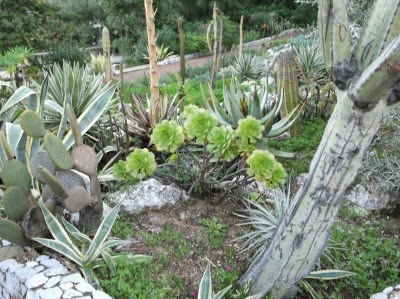
Before taking the Cable Car to the top of the Rock I strolled around the Gibraltar Botanic Gardens (free) - sometimes called the Alameda Gardens.  It is delightful to wander among the various plants and trees - cacti, succulents, shrubs, colourful hibiscus, palms and flowers. 

Amazingly these gardens were created from what used to be the Grand Parade where military ceremonies and changing of the guard took place.  Gibraltar's version of London's Horse Guards Parade?

So there I was at the top of the Rock jacketed and hooded and keeping a firm grip on my bag - shoulder strap crosswise so the monkeys couldn't steal it.  But where were they?  No, not apes, but Barbary Macaques. Tail-less, unlike monkeys.  They were keeping well away out of the wind.  It was quite difficult trying to take photos of the fantastic views, but I did manage to get some.

Morocco

Look how close Morocco is and, of course, there are lots of lovely views of the Spanish mainland and along the coast.


A stroll around the shops is interesting.  I bought socks in BHS and a blouse (on sale) in Wallis.  Oh yes, there are also English pubs, post boxes and red telephone boxes.

One hint - it is a long walk from the cruise ship dock so, unless you are strong of leg, take the shuttle bus - it will be worth it.  From Casements Square you can shop or go sightseeing.  North of the square are the World War II tunnels, the Military Heritage Centre, the City Under Siege Exhibition and a Moorish Castle.  The Cable Car to the top of the Rock is near the Botanic Gardens to the east of Casements Square.


Of course you can always fly in to Gibraltar which is an experience in itself - Winston Churchill Avenue crosses the runway.


Tuesday, 27 May 2014

Getting Around Barcelona


Whether you've heard of Barcelona because it is the capital of the Catalonia or due to its fantastic football team, when visiting this great city you cannot fail to be impressed.

Whenever I am asked for advice about what to do in a big city I give one answer:  If there is a hop-on-hop-off tour bus, take it.  Stay on it for the first time around and make notes of the places you want to visit.  Then second time around you can do the hop on and off bit.  By then you'll have a good idea of the layout and can go it alone.  Barcelona has plenty of these roofless double-decker buses which encompass all parts of the city that are of interest to tourists.  Bearing in mind the distances between many of the 'must see' sights the buses are well worth the expense.

Probably the most recognisable site is the unfinished church of the Sagrada Familia (Sacred Family) by Gaudi.  Building started in the 19th century and Gaudi died in 1926 (killed by a tram in Barcelona) when just one of the spires had been completed.  Now it is possible to go into the church and climb to the top to see splendid views of Barcelona.


The city has many types of architecture - Gothic, Renaissance, Neo-classical and modern.  All this as well as statues of famous people - Christopher Columbus stands on a tall column so you have to look up a long way to see him - and colourful 'shapes'.


Taken from top of the bus.
You want shopping?  Amble up the Ramblas, browse the department store called El Corte Ingles (The English Court), get lost in the side streets and find the markets.  Somewhere not to miss is in the Plaza de Espana (in Catalan Placa d'Espanya) and called Las Arenas.  A clue as to what the building originally was - it is circular.  Got it?  Another clue - bullfighting was banned in Catalonia.  That's right, it was a bullring.  To make it higher it was lifted above the street and new floor inserted.  It was then covered with a roof and a terrace.


If you need somewhere quieter then go to Montjuic which towers over the city and has gardens and museums.  As it was the centre of the 1992 Olympics there is an Olympic Museum.  And if needing to cool off there is a public swimming pool.  If you want fabulous views take the cable car back down to the World Trade Centre.

Sorry, football fans, did you think I'd forgotten you?  Yes, you can go to visit FC Barcelona's stadium.


If you want information on all that Barcelona has to offer you'll need to buy a very good guide book.  There is far too much to put into an article or a blog!

Tuesday, 6 May 2014

Back again in Florence

It was great to be back in Florence, albeit an overcrowded city.  Yes, lots of tourists and, as it was also the Easter holidays, group upon group upon group of Italian schoolchildren of varying ages.

Something which the former Mayor of Florence (now the young and handsome President of Italy) did was to ban unnecessary vehicles from the centre of this beautiful city.  Not only does it make the roads safer but has also cut down on pollution.  Everyone gains - people's health and the fabric of the historic buildings.  But when strolling do be on the lookout for bicycles!  Thousands of them.  I suspect Florentines are at lot healthier now.


If pushed for time and you don't feel the need to climb up inside the Duomo (Cathedral) don't waste time going inside.  The exterior with its white, green and pink marble facade is by far the best part and if you have strong legs you can always climb the matching bell tower.  Although at the moment the outside of the Baptistry is wrapped in plastic for cleaning purposes it is still open to the public.  The Gates of Paradise doors are replicas, the originals being in the Museo dell'Opera del Duomo along with other valuable artifacts.


Whilst I was there all of the museums at the imposing Pitti Palace were open.  The ticket office is at the far end of the building (from the Ponte Vecchio).  If you are over 65 take your passport for senior discounts and the Boboli Gardens on their own are FREE for seniors.  The palace was begun in 1440 for Luca Pitti, a rival of the Medici family for whom it has also been a home.  When Florence was the capital it was used by the Italian Royal family.


Although the Piazza della Signoria may not be a familiar name, the Uffizi is and this is where the art gallery is located, but towering over the square is the Palazzo Vecchio (Town Hall).  Even if you don't go inside to see the fabulous rooms and artwork, do pop into the courtyard to see the delightful fountain with a cherub holding a dolphin.  So sweet.


My favourite church in Florence has to be the Santa Croce with its green and white facade.  I think that is because here I can pay homage to a great musician - Rossini, who is buried at this church.  There are also the tombs of Galileo, Michelangelo, Machiavelli and a Memorial to Dante (who died in Ravenna).


You like shopping?  There are plenty of shops some of which can be expensive but there are also markets.  There is an open air one near the Church of San Lorenzo and, just a block from the Piazza della Signoria, is the straw and leather market.


Incidentally, if planning to visit the museums do remember that queues can be very long.  Advice?  Get there well before opening time.

Saturday, 26 April 2014

The Royal Alcazar in Seville

Having made my first visit to the Alhambra (in Granada) in 2013 I decided that I really must visit the Royal Alcazar in Seville.  Another palace with Arabic roots.  And some say it is more beautiful than the Alhambra.  Difficult decision.

The Alcazar is like a maze built around a central courtyard, the first room you enter being the Hall of Justice with a small marble basin and trickle jet in the centre, the water flowing out towards a pool in the courtyard.

The Moors perfected the means of keeping cool before the age of air conditioning.  Lots of fountains and running water plus shady galleries, open windows and doorways allowing breezes to waft through.

One of the more well known pools is in the Patio of the Virgins and is surrounded by gardens and wonderful Moorish arches and pillars.  Those who know the Alhambra will recognise this patio as, apparently, the in Granada was inspired by this one is Seville.

Another patio surrounded with glorious lacy looking Moorish arches is the Plaster Patio.  The Moors definitely had a way with plaster and tiles.  The Salon de los Embajadores (Ambassadors) has a dome that is decorated with gilded wood, the horse shoe arches, tiles and pretty plasterwork. 

The gardens of course are really splendid and have a fair share of pools and fountains.  In one fountain and small pool a pair of mallards were having a very splashy time.  One of my favourites is the Pool of Mercury with the winged messenger on a small plinth and surrounded by cherubs - and an occasional duck.

In front of a small temple topped with a blue and white tiles dome is the Lion's Pool.  The statue of the lion being based on the Muslim one in their decorative art.

Other gardens include a Grotto and the Flower Garden, Troy's Garden, Lady Mary of Padilla's Baths and Grotto, Pool and the Sultana's Grotto, the Poet's Garden and more that I haven't mentioned. 


Whether you visit the Royal Alcazar first or the Cathedral, you'll really enjoy the experiences.


Take a rest on this beautiful tiled seat.